The problem
Repair is often cheaper and greener, but people rarely choose it. My research showed the barriers are mostly perceived: price, duration, know-how, trust. Underneath them sits one real gap: information, the kind people need to decide differently.
Reparo set out to supply it and make choosing repair as effortless as buying new.
What I built
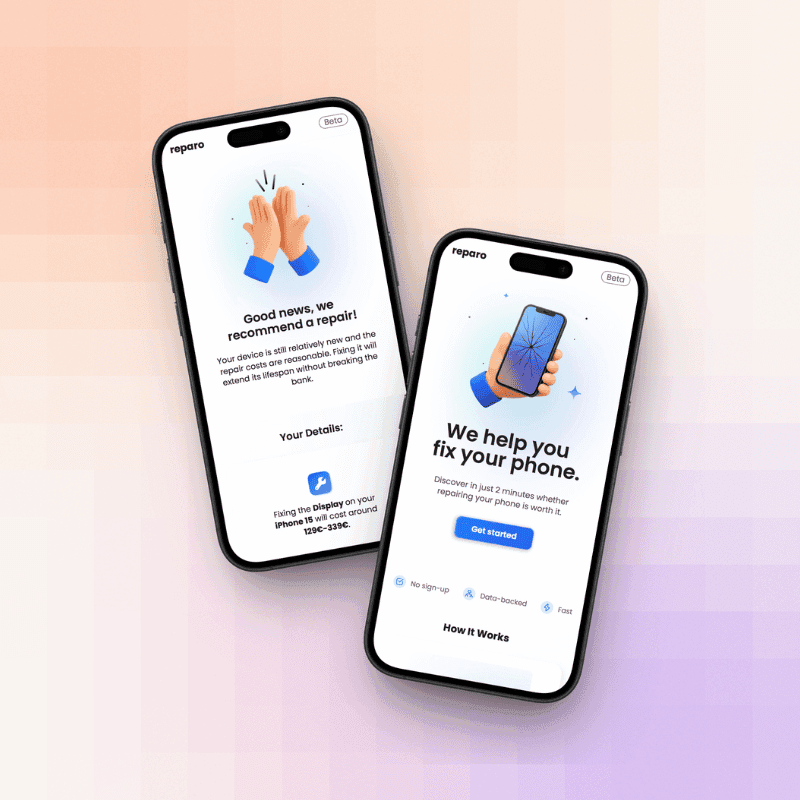
A no-code web app that turns a few inputs into a clear, personalized repair verdict in under two minutes, responsive on desktop and mobile.
- Input: brand, series, model, capacity, defect.
- Engine: rules-based; returns one of three verdicts — repair, consider a repair, or replace — weighing repair price by damage and model against how long the phone will still get manufacturer security updates.
- Also surfaced: how hard a self-repair would be, and how long it would take.
- Stack: Bubble + Airtable (rules, prices, device support).
- Scope: left out provider booking and an AI assistant on purpose, to validate the core decision first.
- Shipped: solo, full PM loop in ~6 weeks — discovery survey, PRD, MVP, and a validation survey with the original respondents.
What it confirmed
Everyone understood the tool and could describe its value in their own words, and the recommendation landed as useful, with 3 of 4 saying they'd use it for a real repair decision. The security-update information stood out as especially valuable — so much that people wanted even more of it, like how long a phone stays safely usable after updates end.
The decision (why I stopped it)
Reparo worked as a tool, but the business case was a different story. The realistic way to monetize was B2B: targeting repair shops or layering on extra services, which meant building a much bigger, different product than I set out to make, and one I didn't see myself building.
Two realities made that path harder. The data: repair shops have wildly different prices and formats that are genuinely hard to collect, while online refurb and resale providers are easy to compare. And behavior: people are reluctant to send in their only phone, so trust (handing your most sensitive device to an unknown shop) and time without a phone push them toward refurb or new anyway — an experience refurb sellers already nail (buy or trade in first, send the broken one in after, never without a working phone). A repair-decision tool can't beat that without becoming a logistics operator, so I closed the project deliberately rather than chase it.
The lesson
AI changes what's buildable. It doesn't change what's wanted.